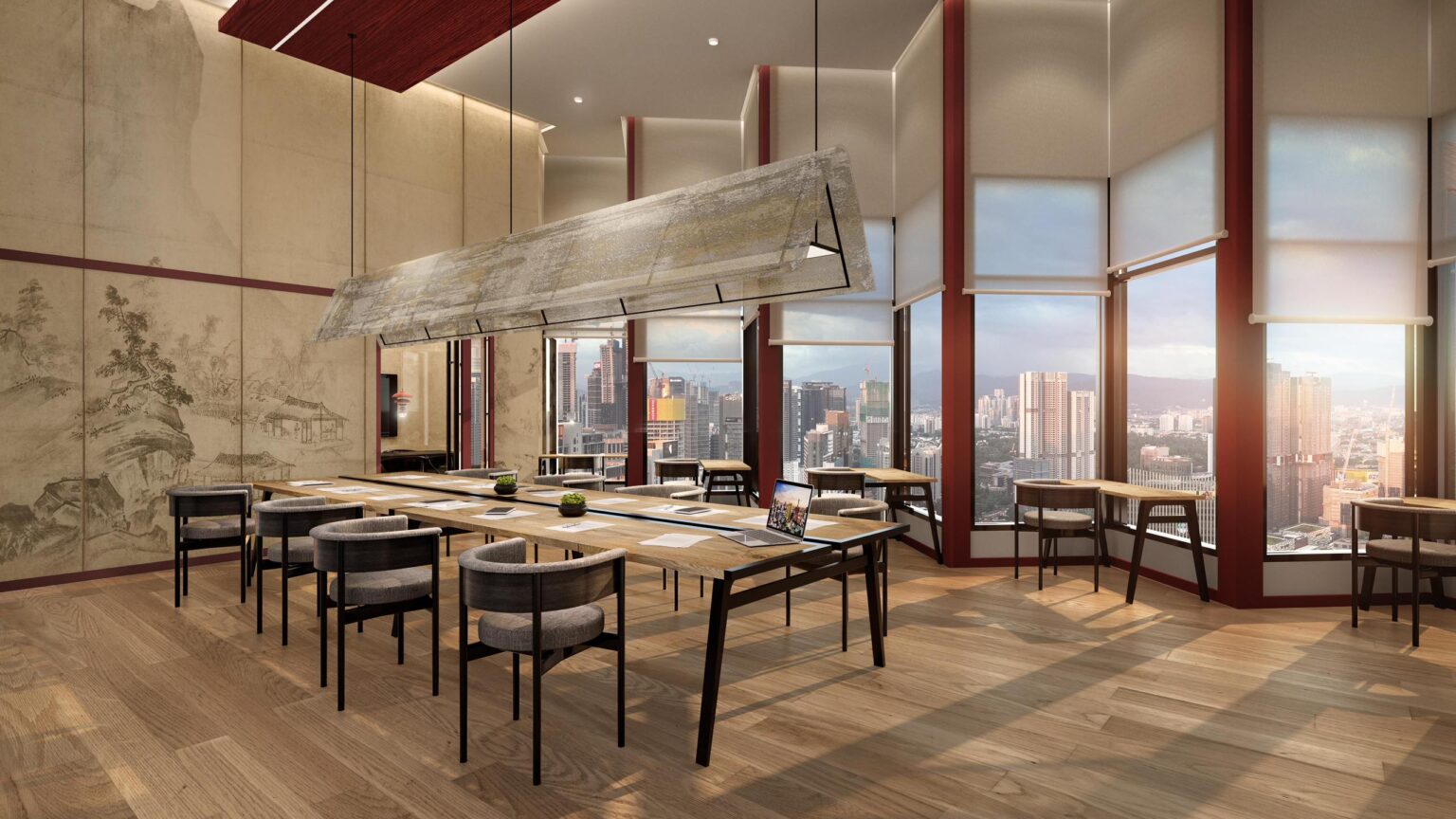
RTS Link customs uses co-located CIQ: you clear both Singapore and Malaysia immigration at your departure station, then ride about 5 minutes and walk straight out on arrival. At Woodlands North, ICA departure clearance is followed by Malaysian immigration one level below; at Bukit Chagar, the same happens in reverse for trips into Singapore. Bukit Chagar is planned with 100 e-gate lanes that accept QR codes or passports.
RTS Link customs is one of the most-asked topics as the Johor Bahru–Singapore line approaches its targeted February 2027 passenger launch. Most people who cross the Causeway today are used to clearing immigration twice, once at the Bangunan Sultan Iskandar (BSI) CIQ in Johor Bahru and again at Woodlands Checkpoint. The RTS Link changes that with a “co-located” CIQ arrangement, where officers from both countries work inside the same departure station. This guide walks through exactly how RTS customs and immigration will work in each direction, what is checked, what to prepare, and why the arrangement matters to people who live near Bukit Chagar, including buyers at Causewayz Square.
For background on the line itself, see what the RTS Link is. For train frequency and passenger numbers, read our guide on RTS Link capacity and frequency.
What is co-located CIQ on the RTS Link?
Co-located CIQ means the customs, immigration and quarantine checks of both Malaysia and Singapore are placed together at each RTS station. You complete all border formalities before you board, so there is no second immigration queue when you arrive.
CIQ stands for Customs, Immigration and Quarantine. On the RTS Link, each country sets up a “Designated Area” inside the other country’s station. Malaysia has a Designated Area at Woodlands North in Singapore, staffed by Malaysian preclearance officers. Singapore has a Designated Area at Bukit Chagar in Johor Bahru, staffed by Singapore officers. Both governments passed legislation to make this possible; Singapore’s Cross-Border Railways (Border Control Co-location) Bill had its second reading in May 2026.
| Feature | Today: road crossing (bus / walk) | RTS Link co-located CIQ |
|---|---|---|
| Immigration points | Two separate checkpoints: BSI in JB and Woodlands in Singapore | Both countries at the departure station only |
| Travel between checks | Bus or walk across the Causeway, subject to traffic | About 5-minute train ride |
| On arrival | Queue again for the second country | Walk straight out; only selective checks |
| Clearance technology | QR code clearance at Woodlands and Tuas since Jan 2025 (ICA) | Bukit Chagar: 100 e-gate lanes accepting QR codes or passports |
| Departure points in JB | BSI CIQ (Bukit Chagar area) | RTS Bukit Chagar station, Jalan Tun Abdul Razak |
How RTS customs works: Johor Bahru to Singapore
Going into Singapore, you clear both Malaysian departure and Singapore arrival formalities at Bukit Chagar before boarding. After the 5-minute ride you exit at Woodlands North without another immigration queue.
- Enter Bukit Chagar station and pass the RTS fare gate.
- Malaysian departure clearance by Malaysian officers, including security screening.
- Singapore arrival clearance in Singapore’s Designated Area inside the same building, carried out by Singapore officers with the same powers they have at home.
- Board the train to Woodlands North, about a 5-minute journey.
- Arrive and exit into Woodlands, where you can connect to Singapore’s Thomson–East Coast Line.
Singapore’s Ministry of Home Affairs (MHA) explained that travellers entering Singapore “complete both departure and arrival clearance at Bukit Chagar” using the same process as the southbound trip.
How RTS customs works: Singapore to Johor Bahru
Coming into Johor Bahru, everything happens at Woodlands North. MHA set out the sequence in its May 2026 parliamentary speech.
- Pass the RTS fare gate at Woodlands North.
- ICA security checks and departure clearance by Singapore’s Immigration and Checkpoints Authority.
- Malaysian CIQ zone, one level below in the same building, where Malaysian officers carry out immigration clearance and selective security checks.
- Board the train to Bukit Chagar.
- Walk straight into Johor Bahru. There is no further immigration clearance on arrival, although Malaysian officers at Bukit Chagar may still carry out selective security checks, inspect customs permits and collect taxes and duties where needed.
For anyone living in JB City Centre, this last step is the real advantage: you step off the train and are already home side, a short walk from Bukit Chagar, City Square and the Tanjung Puteri waterfront.
Inside the Bukit Chagar ICQ complex
The Malaysian side of the station is being built for high throughput. MRT Corp’s project director described the facilities in August 2026, and officials expect clearance to take a matter of seconds per passenger once fully running, a projection that will be tested after opening.
- 100 e-gate lanes that accept QR codes or passports
- 10 security screening lanes for physical inspection
- 18 baggage scanners and body scanners in the arrival hall
- A dedicated lane for passengers without luggage, useful for daily commuters
- Secondary counters, so anyone flagged for checks is handled separately and the main flow keeps moving
- Agencies on site including the Malaysian Border Control and Protection Agency (AKPS) and the Malaysian Quarantine and Inspection Services (MAQIS)
- Amenities such as a nursing room, a surau and self-service ticket kiosks
Real-time monitoring is built in, so issues can be spotted and handled quickly during peak periods.
What is checked at RTS customs?
The checks are the same kinds you face at any land border: passports or QR codes, security screening, and customs and quarantine rules for goods. What is new is who can check what, and where.
Items controlled under the other country’s law
Officers can check for items that are controlled or prohibited under the destination country’s law, even if the departure country does not restrict them. Where such an item is found, the traveller may be allowed to voluntarily discard it as a condition of boarding. The exceptions are items that threaten human safety, live creatures and anything that is evidence in an investigation; those must be handed over or taken into officers’ possession.
Customs permits, taxes and duties
Malaysian officers at Bukit Chagar may inspect customs permits and collect taxes and duties when needed. If you are carrying goods above personal allowances, plan to declare them as you would at any checkpoint.
Quarantine
Quarantine rules for food, plants and animals still apply. MAQIS has a presence at Bukit Chagar, so the safest approach is to treat RTS customs like any other border crossing and check the latest rules before carrying fresh produce or pets.
How to prepare for RTS immigration clearance
The quickest crossings will come from preparing documents and apps in advance. A simple checklist helps commuters and visitors alike.
- Carry your passport every time, even if you clear with a QR code. ICA states the passport must still be carried when travelling.
- Set up the MyICA Mobile app to generate a QR code for Singapore clearance. Singapore Citizens, Permanent Residents, Long-Term Pass holders and returning foreign visitors can use it; first-time foreign visitors and travellers using a new passport present the passport on that trip.
- Enrol biometrics with ICA or MOM if you plan to use automated lanes into Singapore.
- Check Malaysian entry requirements for your nationality, including whether the Malaysia Digital Arrival Card (MDAC) applies to you.
- Travel light at peak to use the no-luggage lane, and allow extra time during the first weeks after launch.
- Check fares and hours once announced; see our RTS fare guide.
RTS customs vs the BSI road CIQ: which should you use?
Both crossings will keep operating, so the right choice depends on how you travel. The RTS suits people on foot with light bags; the BSI CIQ remains the route for cars, motorcycles and most cross-border buses.
| If you are… | Likely best option | Why |
|---|---|---|
| A daily commuter living near Bukit Chagar | RTS Link | Walk to the station, one clearance point, about 5 minutes across |
| Driving or riding a motorcycle | BSI CIQ or Second Link | The RTS carries passengers only; vehicles stay on the road crossings |
| Arriving in JB by ETS or KTM Komuter | RTS Link | JB Sentral is about 400 m from Bukit Chagar, and an RM60 million bridge for Komuter passengers was approved in Aug 2026 |
| Carrying goods to declare | Either, but allow time | Customs permits and duties can be handled at Bukit Chagar as well as BSI |
| A weekend visitor heading to JB City Centre | RTS Link | Exit near City Square and the Tanjung Puteri waterfront |
After the RTS starts, KTMB rail services into Singapore will cease within six months under the bilateral agreement, so the Shuttle Tebrau’s Woodlands Train Checkpoint clearance will no longer be an option. Cross-border buses will continue, according to Singapore’s Ministry of Transport.
Common misunderstandings about RTS customs
- “I clear immigration at both ends.” No. Both countries’ immigration is completed at the departure station.
- “Arrival means zero checks.” Not quite. There is no second immigration queue, but selective security and customs checks can still happen at the arrival station.
- “A QR code replaces my passport.” The QR code speeds up clearance, but the passport must still be carried.
- “The RTS replaces the Causeway.” It adds a fast rail option for passengers; road crossings remain for vehicles.
Who handles incidents on the RTS Link?
Each country manages incidents in its own territory, and there are clear rules for the short stretch over the Straits of Johor. This matters for safety and gives travellers confidence that the cross-border arrangement has been thought through.
- If a train can complete its journey, the country where it stops manages any on-board incident.
- If a train stalls, the country in whose territory it sits takes charge; between the boundary markers (Pier 47 for Malaysia, Pier 48 for Singapore), the position of the train’s nose decides.
- For search and rescue or medical evacuation, officers can cross the boundary marker with notification only.
- Both countries hold joint exercises before revenue service begins and regularly afterwards.
Information collected by officers working in the other country is treated as if collected at home and protected under home-country law.
Why co-located CIQ matters for homes near Bukit Chagar
Because all formalities happen at the departure station, the time from your front door to Woodlands depends mostly on how quickly you can walk to Bukit Chagar. That makes walking distance to the RTS station more valuable than ever.
Causewayz Square (Exsim CIQ)
Causewayz Square, widely known as the Exsim CIQ project, is on Jalan Lumba Kuda in Tanjung Puteri, about 800 m from the RTS Bukit Chagar station and about 600 m from the BSI CIQ. Residents can walk to either crossing, choosing the RTS for a 5-minute rail trip with single-point clearance or the road CIQ when that suits them. It is freehold, with target completion around 2030, and a pedestrian link to the CIQ and RTS has been proposed by the developer. See our walking guide from Causewayz Square to the CIQ and RTS and the Bukit Chagar RTS station guide.
Kebun Teh: The Asteriaz and The Celestz
The Asteriaz and The Celestz in Kebun Teh are about a 10-minute drive (around 3.2 km) from the CIQ, and a shuttle to the CIQ and RTS has been proposed. They are not walkable to the RTS, but residents still benefit from single-point clearance once they reach the station.
Historically, homes with fast, predictable access to cross-border transport have tended to appeal to Singapore-based tenants and commuters. To explore options, browse JB condos near the RTS Link, or WhatsApp us for the latest SPA price list for Causewayz Square, The Asteriaz and The Celestz.
Sources
- MHA Singapore: Second reading of the Cross-Border Railways (Border Control Co-location) Bill
- MHA Singapore: Introduction of the Border Control Co-location Bill
- Malay Mail: RTS Link aims to fast-track immigration clearance (Aug 2026)
- LTA–SPAD joint factsheet: Highlights of the RTS Link
- LTA: RTS Link service targeted for February 2027
- ICA: Use of QR code for immigration clearance
- ICA: Full implementation of QR code clearance at land checkpoints
- MOT Singapore: Shuttle Tebrau after RTS Link commencement
This guide is general information, not financial advice.